Sale!
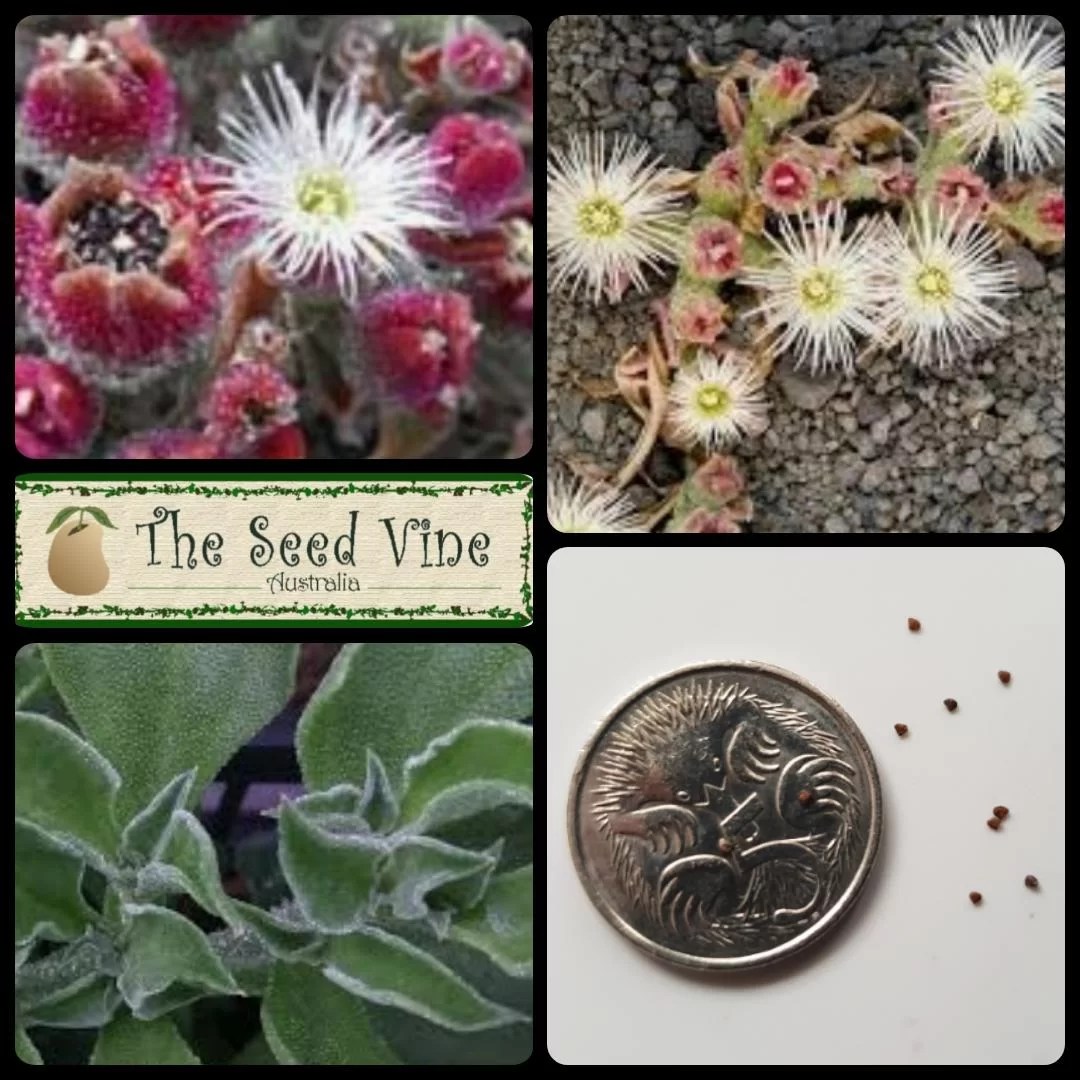
Mesembryanthemum crystallinum – Crystal Ice Plant
$ 3.13
Mesembryanthemum crystallinum (Crystal Ice Plant) is a succulent herb plant that is native to Africa and Southern Europe. It gets its common name due to water storing cells that cover the plant, that give the Crystal Ice Plant a glistening, crystalised look. The plant is low growing (prostrate) and can cover a 1 metre area and has flowers similar to the Pig’s Face Plant, which it is related to. It is an unusual plant that can be either annual, biennial or perennial dependent on the climate and conditions it is grown in. The leaves and stems of this species are edible raw or cooked and have acidic, slightly salty taste. Growth Mesembryanthemum crystallinum grows as a groundcover to approximately 10-15 cm’s tall, with a spread of ½-1 metre. This species grows happily in poor soils as long as they drain well, including salty soils and clay soils, it is also drought tolerant. The flowers appear in Spring to Early Summer, are white, range from 3-5 cm’s in diameter and have thin, string like petals. Flowers open in the morning and close again at night. Not frost tolerant and will die off once cold temperatures get close. The Crystal Ice Plant needs some moisture while it is young, but very little to none as an adult plant. Prune as required to keep it neat and tidy. FAMILY: Aizoaceae CLIMATE: Temperate, Mediterranean, Sub-Tropical, Tropical TEMPERATURE RANGE: 10 to 38°C / 50 to 100°F SOIL TYPE: Well draining. Tolerant of salty and clay soils. LOCATION: Full Sun HEIGHT: Up to 15 cm’s (6 inches) WIDTH: Up to 1 metre (40 inches) pH: 5.5-7.5 GROWTH TYPE: Annual, Bienniel or Perennial WATER REQUIREMENTS: Light POLLINATION: Insect Pollinated, Bisexual MATURITY: From 12 weeks GERMINATION RATES: 68-92% GERMINATION TIME: 2-4 weeks SEEDS PER GRAM: Approximately 5000 MEDICINAL QUALITIES: Yes WEED POTENTIAL: Yes in California FACTS ABOUT MERSEMBRYANTHEMUM CRYSTALLINUM (Crystal Ice Plant) The leaves of the Crystal Ice Plant can be crushed and used as a soap substitute. The plant absorbs and stores salt into its roots, shoots and bladder cells. Once the plant dies it releases the salt back into the ground via a process called ‘leaching’, this prevents many other plants from growing in this area, leaving it free for its own seed, which is not bothered by the salt to germinate. This species will accelerate itself span to seed producing when stressed.